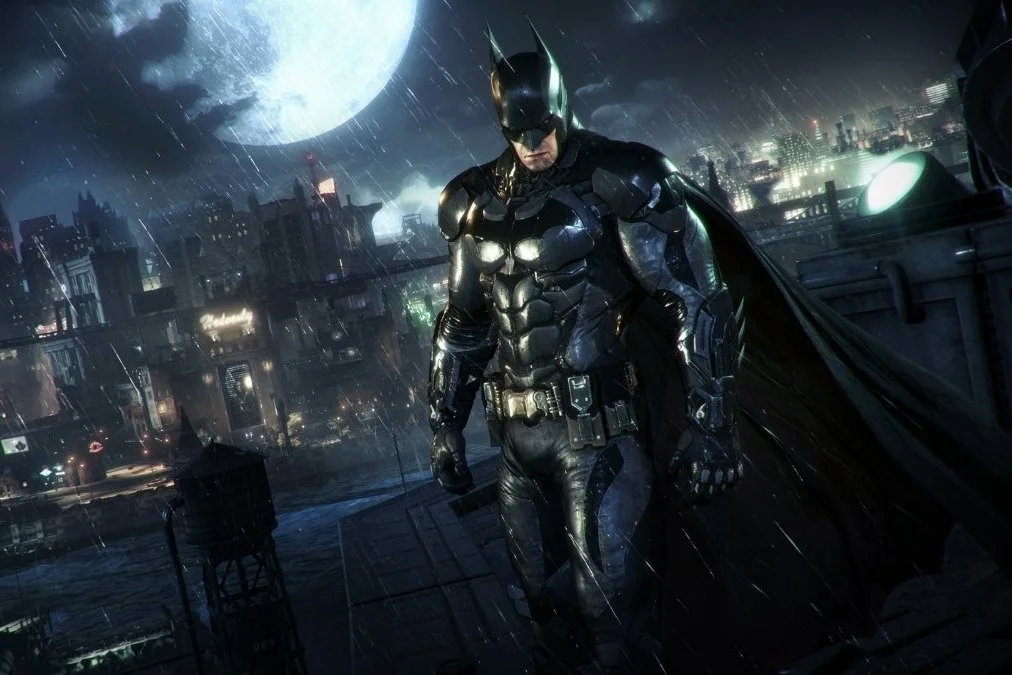
Earlier this year, LEGO Batman: Legacy of the Dark Knight launched with a themed Arkham Trilogy pack, complete with suits and a Batmobile pulled straight from Rocksteady’s era of Batman games. Combine that with confirmation that Rocksteady is developing an all-new single-player Batman Arkham title, and it felt like the right moment to look back at how the original trilogy actually ended.
The End of an Era
Arkham Knight closes out the story Rocksteady began with Arkham Asylum in 2009 and continued through Arkham City in 2011 — Arkham Origins, released in between, was made by a different studio as a prequel and isn’t part of this core trilogy. Scarecrow returns with a fear toxin plot to empty Gotham, while a mysterious new villain calling himself the Arkham Knight leads a deeply personal vendetta against Batman. It’s the culmination of everything the series built toward: the psychological toll of the mission, the isolation, and Batman finally confronting whether his methods have made things better or worse.
The Batmobile: Bold Addition or Overused?
The biggest structural addition to the formula is a fully drivable, combat-capable Batmobile that can transform into a tank mode for a new kind of vehicular combat. It genuinely improves how you move through the game’s larger, more open version of Gotham, and the driving itself feels great. Where it gets more divisive is combat — some of the tank battles interrupt the flow of what made Arkham’s signature freeflow combat so satisfying in the first two games, and it’s a fair criticism even years later.
Scarecrow, Fear, and a Batman Unraveling
The story leans hard into Batman’s psychology, using hallucinations of the Joker — who died at the end of Arkham City — as a recurring, increasingly disturbing presence as the fear toxin plot escalates. Kevin Conroy, voicing both Batman and the Joker hallucinations, delivers some of the most memorable material of his entire run in the role. Depending on how much of the game you complete, the ending lands differently too, which gives dedicated players a real reason to chase full completion.
What Works
- Emotionally satisfying conclusion to the Asylum-City-Knight arc
- Kevin Conroy's Joker hallucinations are a series highlight
- Playable Robin, Nightwing, and Catwoman add real variety
What Doesn't
- Batmobile tank sections can interrupt combat flow
- Some open-world side content feels like padding
- 2015 PC launch was a genuine technical disaster
Playable Allies
For the first time in the trilogy, several side missions let you directly control Robin, Nightwing, and Catwoman, each with their own distinct movesets and gadgets rather than just reused Batman animations. It’s a smart way to break up the main story while giving these supporting characters real mechanical identity instead of only existing in cutscenes.
The PC Launch, Honestly
It’s worth being upfront about this rather than pretending it didn’t happen: the original 2015 PC release was one of the most infamous technical disasters in recent AAA history, with severe frame rate problems, texture issues, and crashes bad enough that Warner Bros. pulled it from sale entirely for months.
Good to know: The game returned in a substantially patched state and today's version runs in a genuinely stable, playable condition — don't judge it by the day-one reports if you're picking it up now.
What’s Next for Arkham
LEGO Batman: Legacy of the Dark Knight’s Arkham Trilogy tribute pack is a clear sign WB still sees this era as worth celebrating, and Rocksteady has been separately confirmed to be developing a new single-player Batman Arkham game — though WB’s own roadmap points to a 2027-2028 window, so it’s still a way off. That gap makes now a genuinely good time to either revisit Arkham Knight or finally see how the story actually ends before the next chapter eventually begins.
JoystickVerse Verdict
Arkham Knight doesn't quite reach the tight, focused highs of Arkham City, but as a conclusion to the trilogy, it delivers real emotional weight and some of the series' best character writing. The Batmobile is a genuinely mixed bag — brilliant for traversal, more divisive in combat — but it doesn't undo everything else this game gets right. With a new Rocksteady Batman game still years out, there's no better time to finally close out this chapter of the Dark Knight's story.